

Cereal box designs may summon childhood memories of Tony the Tiger, Toucan Sam or Snap, Crackle and Pop, but while CPG giants were ingraining those characters into the American psyche, they simultaneously shaped public policy that would govern the entire food industry for decades.
That history is the topic of a new book, ‘Sugar Coated: Unboxing the Hidden Forces Shaping America’s Favorite Breakfast Food,’ by Marion Nestle, the Paulette Goddard Professor of Nutrition, Food Studies and Public Health, Emerita, at New York University, and Lisa Sutherland, interim president at Jacksonville University and former vice president of Kellogg Co.
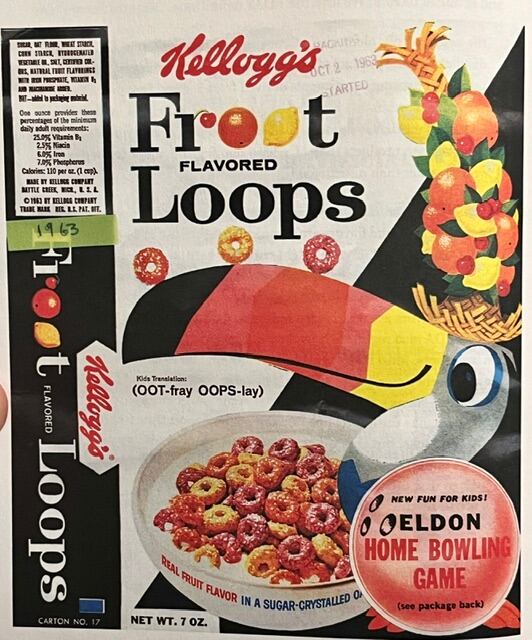
The book, published by University of California Press, offers a comprehensive history of the ingredients, label claims and marketing tactics used by cereal companies since the late 19th century to obscure sugar content and other controversial ingredients, while highlighting nutritional benefits like protein, fiber and vitamin fortification.
It is set for release Sept. 8.
Sugar Coated origin story
Nestle, who has authored and edited more than a dozen books on the food industry in her career, including Food Politics, What to Eat and Soda Politics, said she has collected cereal boxes covers for decades.
She was researching nutrition facts labels in 2010 and contacted Kellogg Company.
“I just couldn’t find examples of cereals or any other kinds of food projects that had been printed before 1990, when the new (Nutrition Labeling and Education Act) law went into effect,” Nestle said.
Kellogg declined Nestle’s request for access to the company’s archives, but Sutherland, who had known her for years, was able to provide the researcher with decades of box designs for Rice Krispies, Froot Loops and All-Bran.
The boxes provided a history of not only the marketing trends associated with the cereals, but also the regulatory framework that governed them, Nestle explained.
During Sutherland’s review of the boxes at the company’s headquarters in Battle Creek, Mich., she was able to connect the dots to show why and how packaging claims came and went, and how they connected to vitamin content and other health claims.
“Lisa would say, ‘Oh, this is when the FDA passed this regulation, and this is when the FDA passed that regulation. This is when the Center for Science in the Public Interest sued us. … This is when the oat bran craze happened,” Nestle said. “This is when I thought, ‘Holy smoke, there’s a book in this.’”
More than a decade later, Sutherland got a call from Nestle.
“She was just giving me a heads up that she was going to do it, and I was like, ‘Oh no, I’m pretty determined that we’re going to write this book together,’” Sutherland said.

The birth of health claims
Sutherland’s inside knowledge of the industry and Nestle’s experience as an academic and former policy adviser to HHS offers a unique view into the history of the cereal industry and its impact on the overall food industry.
Kellogg was responsible for health claims on food packages because of a petition it filed with the FDA in the mid-1980s, arguing that FDA should approve health claims from cereals.
“When an FDA analysis demonstrated a 47% increase in the market share of All-Bran in the first six months of the campaign, the message was clear; claims sell cereal. Kellogg had broken the health claims barrier. All it had left to do was to get Congress to legitimize the victory over regulations.”
Sugar Coated
“The FDA had never approved health claims on foods because they said if there was a health claim on a food, the food was acting as a drug, and if the food was acting as a drug, it had to meet the criteria for drug efficacy and safety, and it would have to do clinical trials to prove that you’re going to claim that a food prevents heart disease,” Nestle said.
‘Sugar Coated’ explains how Kellogg “did an end run” around the FDA’s restrictions by partnering with the National Cancer Institute (NCI) to link fiber with cancer prevention. NCI jumped at the chance to partner with Kellogg on the cancer prevention messaging that would reach millions of citizens.
Kellogg brand All-Bran began, for the first time, making health claims about its product, Nestle said.
“FDA realized that the All-Bran statement had undermined their ability to regulate health claims; they would no longer be able to stop companies from using claims in marketing,” the book noted. “But Kellogg insisted it had done the country a public service: It would be irresponsible not to inform customers about the health benefits of its products.

“When an FDA analysis demonstrated a 47% increase in the market share of All-Bran in the first six months of the campaign, the message was clear; claims sell cereal. Kellogg had broken the health claims barrier. All it had left to do was to get Congress to legitimize the victory over regulations.”
Make Cereal Healthy Again
‘Sugar Coated’ hits bookstores at a time of big change for the cereal industry.
The Make America Healthy Again movement, led by HHS Secretary Robert F Kennedy Jr, has scrutinized ultra-processed foods, synthetic food dyes and foods with high sugar content, making kids’ cereals a prime target.
Pressuring cereal and candy companies to remove artificial dyes from their products “may be the only achievement of the Make America Healthy Again movement,” according to Nestle.
“This administration is not the slightest bit interested in regulation, as far as I can tell,” Nestle said. “Everything is voluntary, and we’ve already seen what happens when companies voluntarily remove color additives because General Mills did that with Trix some years ago, and when Trix didn’t sell, they brought back the artificial dyes.”


