


Key takeaways:
- The lack of a clear, globally agreed definition of ultra-processed foods is creating confusion for consumers, regulators and manufacturers alike.
- Criticism of the NOVA food classification system is driving a shift towards more nuanced, data-led approaches that attempt to capture differences within UPFs.
- AI-powered tools are emerging to fill the gap, but competing systems risk adding complexity unless a common standard is eventually established.
WISEcode may be the latest name to promise more nuance on ultra-processed foods (UPF), but it’s entering a fast-moving market, a regulatory vacuum and a food industry already under pressure from lawmakers, scientists and increasingly sceptical shoppers.
What’s emerging isn’t just a debate over definitions, but a race to set them.
The Reno-based foodtech startup, which debuted its consumer app at Expo West, isn’t alone in trying to bring order to the UPF debate. Its AI-powered UPF detector app and Non-UPF Shield verification programme sit alongside scanner-based tools, open food databases and newer risk scales that all claim, in one way or another, to smooth out NOVA’s rough edges.
The range of tools already in play shows how unsettled the category has become.
Open Food Facts lets users scan products and see their NOVA processing score across a database of more than three million products. ZOE has built a Processed Food Risk Scale that argues foods should be judged more by likely health impact than by a single blunt processing label. Another app, simply called Processed, says it uses AI to analyse ingredients and classify foods from whole to ultra-processed.
WISEcode’s difference isn’t that it alone is using tech, but that it’s trying to commercialise a more detailed alternative to NOVA just as the policy world is scrambling to define UPFs for real.
The NOVA food classification system still dominates the conversation, but even governments and food safety bodies now openly acknowledge there’s no single, universally agreed definition of ultra-processed foods.
There’s still no official definition in the UK, according to the Food Standards Agency. In the US, the Food and Drug Administration (FDA) and United States Department of Agriculture (USDA) opened a process in July 2025 to build a federally recognised definition, but that work is still ongoing and regulators have yet to set out when a final definition will be delivered.
That vacuum is already being filled by the market, with a surge of ‘non-UPF’ labels and verification schemes emerging as brands look to define the category before regulators do. Moves in California to introduce its own approach to UPFs in school meals – alongside proposals for new seals and standards – show how quickly both policy and labelling are moving ahead of any agreed definition.
And that’s exactly where the problem lies. While the UK’s Scientific Advisory Committee on Nutrition has described the link between higher consumption of processed and ultra-processed foods and poor health as ‘concerning’, it’s also said it remains unclear whether the risk stems from the processing itself or from the fact many of these foods are high in fat, sugar and salt.
Cracks in NOVA

That lack of agreement has created an opening for tech players to pitch something more refined, but criticism of NOVA itself has been building for some time.
WISEcode’s chief scientific officer Richard Black, who is also an adjunct professor at the Tufts University School of Nutrition Science and Policy, has argued that NOVA’s ‘one-size-fits-all approach’ doesn’t reflect the complexity of modern formulations or the diversity of their health effects.
He’s not alone. Kantha Shelke, principal at Corvus Blue LLC, previously told this site that processing itself is often misunderstood, with many so-called ultra-processed foods designed to deliver safety, consistency and accessibility at scale – a nuance that simpler classification systems can overlook.
Similar criticisms are coming from academia. Jimmy Chun Yu Louie, associate professor and discipline lead of dietetics at Swinburne University of Technology, wrote in a 2025 review that NOVA’s binary logic “fails to account for nutritional composition, fortification benefits, and cultural food traditions”.
WISEcode CEO Peter Castleman distils the issue down to two points: “Consumers need clarity. Brands need consistency.” So to meet that demand, WISEcode places foods on a spectrum, from minimal to ‘super-ultra’ processed, rather than dropping them into a single bucket.
That helps explain why newer models are multiplying fast. Some are commercial, some research-led, some consumer-facing and others built more for data analysis – but all are trying to do the same thing: redraw the boundaries of what counts as ultra-processed.
A 2026 scoping review in the British Journal of Nutrition found AI is already being used to assess UPF consumption, highlighting a growin gbody of research in the field.
Policy pressure builds

The commercial opportunity is evident, but so is the political pressure.
In the US, federal agencies are still collecting the data needed to define UPFs, yet the rhetoric has already sharpened. When HHS, FDA and USDA announced their joint process, Health Secretary Robert F Kennedy Jr said UPFs were “driving our chronic disease epidemic” and said a uniform standard would help push the administration’s food agenda further. Even without a final definition, the tone is set.
California has gone further. Gavin Newsom signed AB 1264 in October, making the state the first in the US to define and begin phasing out certain ‘particularly harmful ultra-processed foods’ from school meals. The law sets out a pathway for identifying and restricting specific categories of UPFs in school settings, alongside earlier moves to explore warning labels and other actions on food additives and dyes.
This is where the debate starts to shift. What has largely been a question of definition is becoming one of enforcement – and that brings it much closer to operational reality for suppliers, reformulation teams and major food companies.
Outside the US, the pressure is broader, if less uniform. The World Health Organization (WHO) has convened a guideline development group on UPFs, while the Pan American Health Organization says its Nutrient Profile Model is already being used to ensure that ‘virtually all’ ultra-processed products are captured by front-of-pack labelling rules. It continues to push restrictions on marketing, particularly to children.
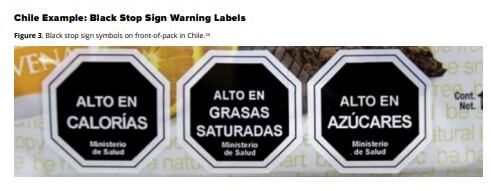
In Mexico, school food rules now ban the sale of junk food and soft drinks, and products carrying warning seals are effectively excluded from that setting – a model shaped in part by Chile’s black stop-sign warning label system, which has become one of the most influential front-of-pack approaches globally.
Dietary guidance is moving in the same direction. Brazil’s official guidelines advise consumers to avoid UPFs; Peru’s FAO-listed guidance recommends limiting them to protect health; and newer Mexican dietary advice also points consumers away from them.
Professor Carlos Monteiro of the University of São Paulo, who pioneered the NOVA concept, has consistently warned that UPFs are reshaping global diets, driven by industrial food systems and the expansion of packaged food markets, describing them as “formulations of ingredients, mostly of exclusive industrial use”.
Whose definition wins?
This is why WISEcode’s launch is interesting, but not unique. The bigger story is that the market is filling up with competing attempts to decode UPFs before regulators settle on a single framework. Some tools stay closely tied to NOVA, as Open Food Facts does. Others, like ZOE’s risk scale, try to separate processing that may be harmful from processing that may simply be functional.

WISEcode sits somewhere in the middle, still focused on processing but breaking the category into finer gradations and packaging that judgement in a way brands can use.
That could help manufacturers, particularly those frustrated that a fortified breakfast cereal, a packaged wholegrain loaf and a probiotic yoghurt can end up sharing the same broad label as a fizzy drink. It could also help retailers and consumers looking for quicker answers from a barcode scan.
But there’s another outcome.
More tools may not clean up the mess at all – they may simply redraw it.
That’s where the pressure on food companies is heading. They’re being squeezed from both sides: by public health advocates pushing for tougher action on UPFs, and by a growing ecosystem of apps, databases and standards that interpret products for consumers before governments do.
AI will almost certainly play a bigger role in that process, because analysing ingredient lists and product data at scale is exactly the kind of task these systems are built for.
But a faster answer isn’t the same as a settled one.
Until science, regulation and commercial tools align, the industry is still facing the same unresolved question: not just what counts as a UPF, but who gets to decide – and whose definition sticks.
Study:
Campbell JL, Schofield G, Tiedt HR, Zinn C. Artificial intelligence applications for assessing ultra-processed food consumption: a scoping review. British Journal of Nutrition. 2026;135(4):463-473. doi:10.1017/S000711452510593X
